

The right business advisor can save a business. The wrong one costs money and time you may not have. Before you hire an advisor or consultant, ask how they get paid, who they work for, what they've actually done, and what happens after the plan is written. The answers to those four alone will rule most people in or out.
Here are the eight questions we'd ask if we were in your seat.
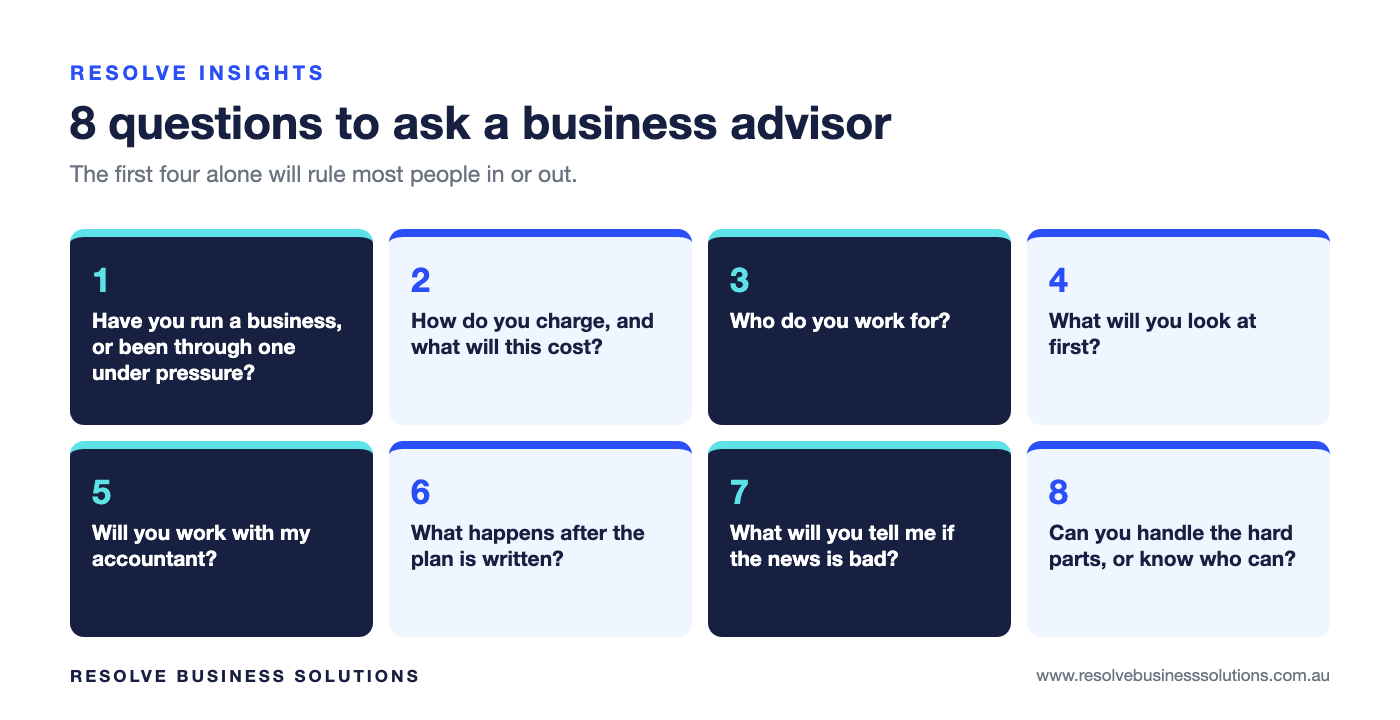
1. Have you run a business, or been through one under pressure?
Advice from someone who has met a payroll with no money in the account lands differently. Ask about their own experience, not only their qualifications.
2. How do you charge, and what will this cost?
You should know the cost before work starts. Be wary of open-ended hourly billing with no estimate, and of large upfront retainers before anyone has looked at your numbers. We quote a fixed fee once we've agreed what's needed.
3. Who do you work for?
It sounds obvious, but ask it. Someone paid by a lender, a liquidator or another party through referral fees may not be working only for you. We don't take referral fees.
4. What will you look at first?
A good advisor starts with cash flow, debts and what's coming due, not with a generic strategy workshop. If the first meeting doesn't touch your numbers, keep looking.
5. Will you work with my accountant?
You want your advisor and accountant working off the same numbers, not competing for your attention. An advisor who wants to replace everyone around you is a warning sign.
6. What happens after the plan is written?
Plans don't fix businesses. Follow-through does. Ask how often you'll meet, what gets measured and who is responsible for each step.
7. What will you tell me if the news is bad?
Sometimes the honest answer is that the business can't be saved in its current form. You want someone who will say so early, while you can still protect yourself, not someone who keeps billing while the options run out.
8. Can you handle the hard parts, or know who can?
ATO debt, Director Penalty Notices, creditor pressure, restructuring. Your advisor doesn't have to do all of it, but they should recognise it early and know exactly who to bring in.
Green flags and red flags
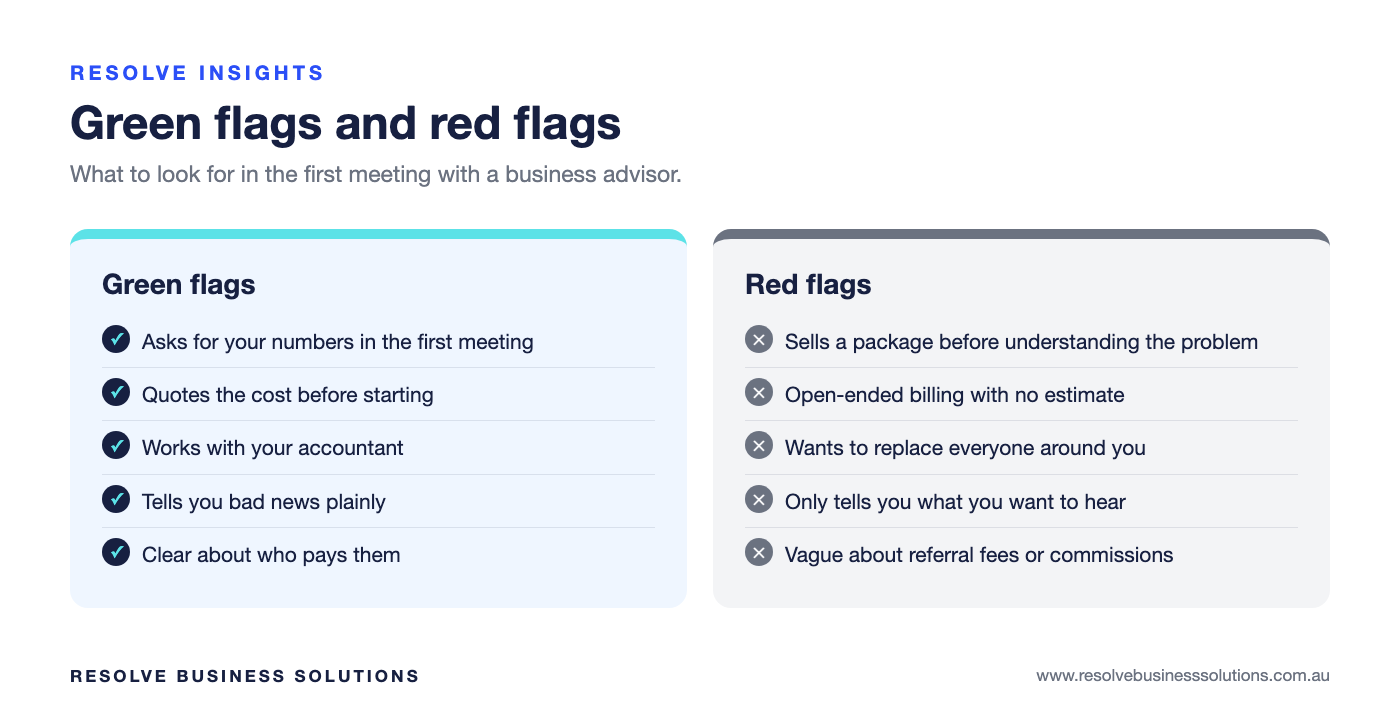
| Green flags | Red flags |
|---|---|
| Asks for your numbers in the first meeting | Sells a package before understanding your problem |
| Quotes the cost before starting | Open-ended billing with no estimate |
| Works with your accountant | Wants to replace everyone around you |
| Tells you bad news plainly | Only ever tells you what you want to hear |
| Clear about who pays them | Vague about referral fees or commissions |
How we answer these
I went through my own business collapse back in 1988, so I understand where you're sitting. Since then we've spent 38 years working with business owners under pressure. We work for you, not your creditors. We don't take referral fees. The first conversation has no charge, and if there's work worth doing we quote a fixed fee before we start. We work alongside your accountant, and we'll tell you straight what we see.
Read more about what a business advisor in Melbourne actually does.
Questions we get asked
What's the difference between a business advisor and a business consultant?
The terms overlap. A consultant often comes in for a defined project and leaves. An advisor usually stays alongside the owner while the plan runs. Ask how the person you're talking to works, whatever they call themselves.
Should my business advisor be qualified?
Relevant qualifications help, but experience with businesses like yours matters more. For specific tax, legal or insolvency work, your advisor should bring in the right qualified professional.
When should I hire a business advisor?
Before a problem forces the decision: when cash is tight on good sales, ATO debt is growing, or a big decision is coming. Earlier is cheaper.
Talk to us
Call Resolve Business Solutions on 0499 099 009 or email support@resolve.net.au. No charge for the first conversation, no obligation.