

In nearly 40 years of working with businesses under pressure, we've rarely met an owner who was surprised by a cash crunch because the business was failing. Most were surprised because they didn't see it coming. The work was there and the invoices were out, but the money landed three weeks after the wages, the rent and the BAS were due.
The fix isn't complicated. It's a weekly cash flow forecast that looks six weeks ahead, so a gap shows up while you still have options. We've built a free one you can download and fill in today.
Download the free 6-Week Cash Flow Forecast (Excel, works in Google Sheets and Numbers)
Options shrink as the due date gets closer
Six weeks out, a cash shortfall is a planning problem. You can chase debtors, move a purchase, ask suppliers for time or arrange finance on reasonable terms. Lenders and the ATO are far easier to deal with when you come to them early with a plan.
Six days out, the same shortfall is a crisis. Wages get paid late, super slips, BAS goes unpaid, and the ATO starts writing letters. That's when Director Penalty Notices, garnishees and pressure calls start, and every option costs more.
Your bank balance isn't the real number
If you're registered for GST, part of every customer payment belongs to the ATO. The forecast works out the GST building up in your account and shows the cash that is genuinely yours after it's set aside.
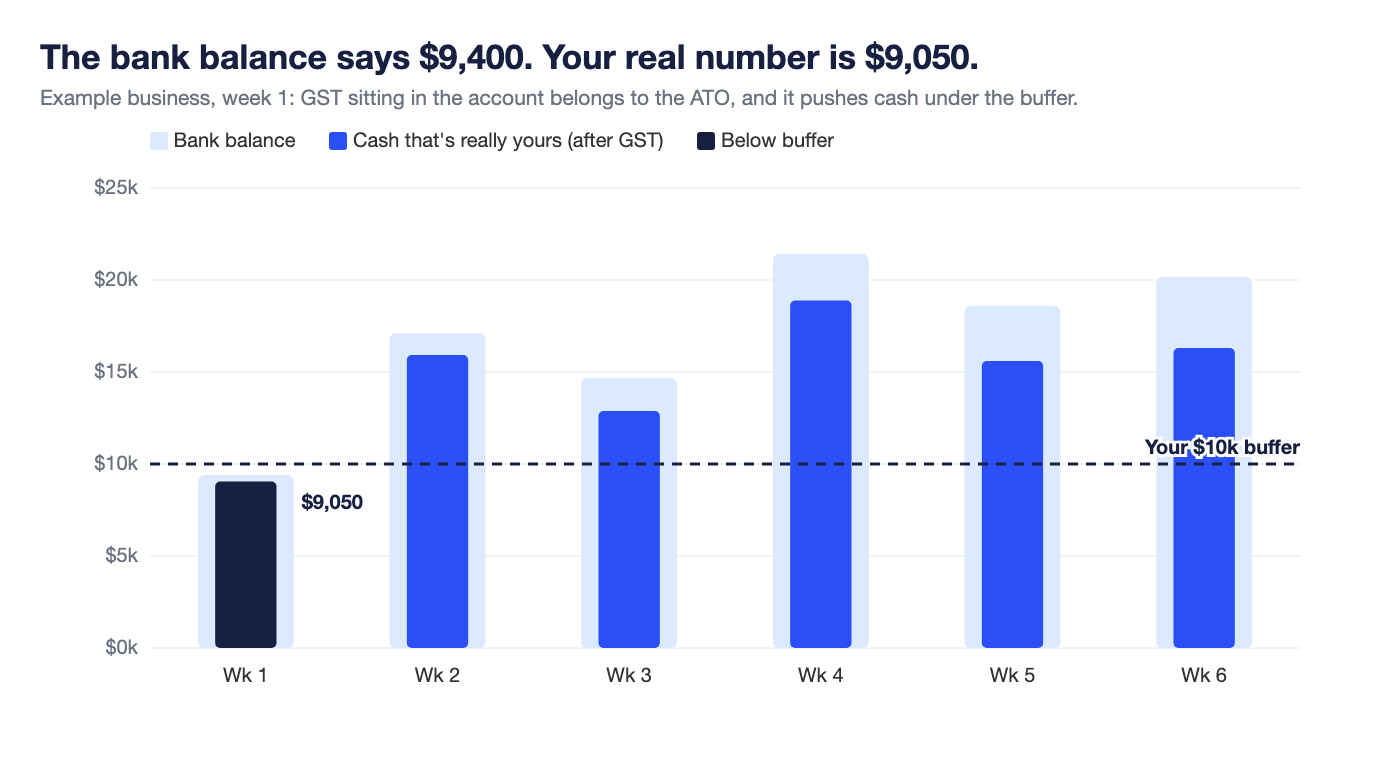
In the example business in the spreadsheet, the bank says $9,400 at the end of week 1. The real figure is $9,050, under the owner's $10,000 buffer. That's the kind of week where an owner skips the BAS payment to cover wages, and it's how ATO debt quietly starts.
Fifteen minutes to set up
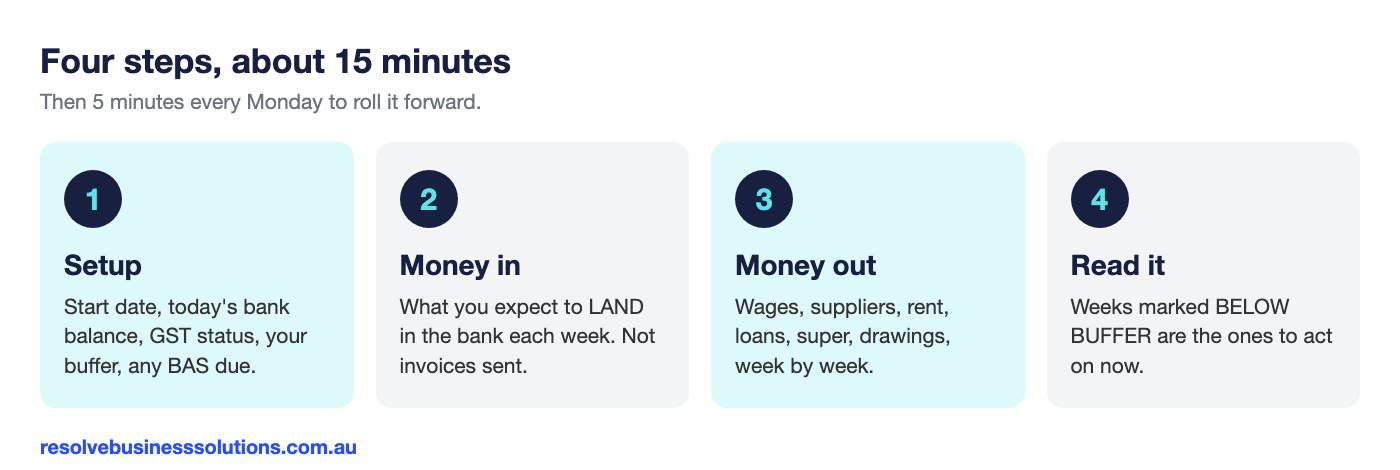
- Setup: the Monday you're starting from, today's bank balance, your GST status, the lowest balance you're comfortable with, and any BAS or ATO payment due in the next six weeks.
- Money in: what you expect to actually receive each week, not what you've invoiced. Be honest about the customers who always pay late.
- Money out: wages, PAYG, super, suppliers, rent, loans and your own drawings, in the week each one leaves the account.
- Read it: any week marked BELOW BUFFER is the one to deal with now.
Update it every Monday. Five minutes a week and you'll always know where the business stands for the next month and a half.
When the gap keeps growing
The spreadsheet includes a tab of practical steps for a short-term gap: chasing overdue invoices, shorter terms, supplier extensions, trimming drawings, and talking to the ATO before a BAS payment is due rather than after.
Those work when the problem is timing. When the forecast shows the gap getting bigger every week, it isn't timing any more. It's a sign the business needs a proper look, and the earlier that happens, the more options you have: a payment arrangement, a restructure, or a small business restructuring plan. Leaving it until the ATO forces the issue takes most of those options off the table.
Talk to us early
Resolve Business Solutions works for business owners, not creditors. We look at where things stand, coordinate the conversations with the ATO, lenders and the right professionals, and help you work out the next step. If you'd rather not fill in the spreadsheet yourself, we'll send you a short online form for the numbers and build the forecast for you.
Call 0499 099 009 or visit resolvebusinesssolutions.com.au.
Download the free 6-Week Cash Flow Forecast
This article and the spreadsheet are general information and a planning tool only. Resolve Business Solutions provides administrative support and coordination; we do not provide financial, legal or tax advice. Check your GST, BAS and tax obligations with the ATO or a registered tax agent.